Best Dal Baati JaipurDal Baati Jaipur25 March 2025
Best Dal Baati in Jaipur | Authentic Rajasthani Culinary Heritage
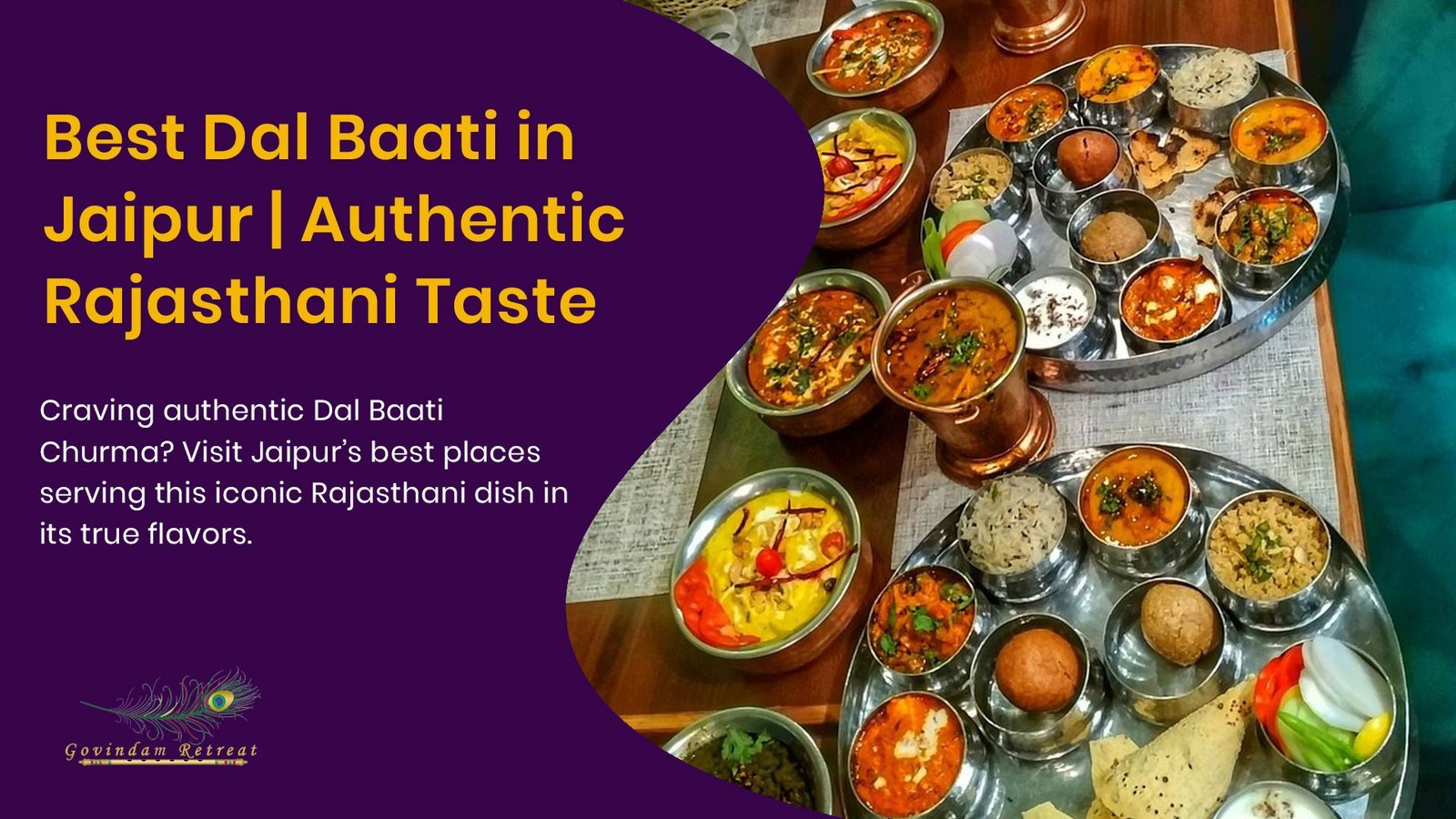
Looking for the best Dal Baati in Jaipur? Discover Rajasthan's iconic baked baati with flavorful dal, desi ghee, sweet churma, traditional accompaniments, and regional food traditions. This guide explains authentic Dal Baati, how to enjoy it, and the Govindam Retreat experience near Govind Dev Ji Temple for vegetarian Rajasthan dining.
Best Dal Baati JaipurDal Baati JaipurDal Baati Churma JaipurRajasthani Food JaipurTraditional Rajasthan FoodVegetarian Food JaipurJaipur Food Guide
GR
Govindam Retreat Editorial TeamReviewed for Jaipur food lovers and tourists
Quick Answer
Where Can You Experience Authentic Dal Baati in Jaipur?
For authentic Dal Baati in Jaipur, look for restaurants that respect the dish's basic character: properly baked wheat baati, flavorful dal, balanced ghee, and traditional accompaniments. Govindam Retreat near Govind Dev Ji Temple offers Rajasthan-inspired vegetarian dining where visitors can ask about the current availability of Dal Baati and related regional dishes.
Key Highlights
Discover one of Rajasthan's most famous traditional foods.
Understand what makes properly prepared baati different from ordinary bread.
Learn how dal, baati, ghee, and churma work together.
Explore Rajasthan-inspired vegetarian dining in Jaipur's heritage area.
Key Takeaways
Dal Baati is built around baked wheat baati and savory lentil dal.
Dal Baati Churma adds a sweet component to the traditional combination.
Texture is one of the most important signs of properly prepared baati.
Ghee adds richness but can be enjoyed according to personal preference.
Dal Baati is naturally connected with Rajasthan's vegetarian food heritage.
Authenticity depends more on preparation and flavor than elaborate presentation.
Best Dal Baati in Jaipur | Authentic Rajasthani Culinary Heritage
Some foods become famous because they taste good. Others become important because they also tell the story of where they came from.
Dal Baati does both.
The firm baked baati, warm lentil dal, aroma of ghee, and contrasting sweetness of churma create one of Rajasthan's most recognizable food experiences. What looks like a simple combination carries a deeper connection with the state's climate, grains, cooking traditions, family meals, and hospitality.
For anyone visiting Jaipur and wanting to taste authentic Rajasthan food, Dal Baati deserves a place on the list.
Best Dal Baati in Jaipur | Authentic Rajasthan Food
What Makes Authentic Dal Baati Different?
How Traditional Dal Baati Is Prepared
Dal Baati Churma: Understanding the Complete Experience
How to Eat Dal Baati for the First Time
Dal Baati as Part of a Rajasthani Thali
Experience Dal Baati and Rajasthan Food at Govindam Retreat
Conclusion
Frequently Asked Questions
What Is Traditional Dal Baati?
Dal Baati is a traditional Rajasthan food combination made from two main components.
The first is dal, a seasoned lentil preparation.
The second is baati, a round wheat preparation traditionally baked until it develops a firm outer surface while remaining softer inside.
What Is Dal?
Dal provides moisture, warmth, protein, and spice to the meal.
Different kitchens may use different lentils or combinations of lentils.
Seasoning can also vary.
This means there is no need for every authentic Rajasthan dal to taste exactly the same.
What Is Baati?
Baati is made from wheat dough formed into round portions and baked.
A well-prepared baati should have its own character.
It should not simply taste like an ordinary roti shaped into a ball.
Its structure allows it to be broken and combined with dal and ghee.
Why Are Dal and Baati Eaten Together?
Baati is comparatively dry and firm.
Dal provides the moisture and flavor that complement it.
When baati is broken and dal enters the center, the two preparations begin to work as one meal.
Where Does Ghee Fit In?
Ghee traditionally adds:
Aroma
Moisture
Richness
Smoothness
The amount can be adjusted according to individual preference.
History and Rajasthan Heritage of Dal Baati
Dal Baati is strongly associated with Rajasthan's food traditions.
Its development makes more sense when viewed alongside the state's geography.
Food Shaped by a Dry Climate
Rajasthan's traditional cooks worked in conditions where water could be limited.
Ingredients such as:
Wheat
Millet
Pulses
Gram flour
Ghee
Dairy
Dried ingredients
became important parts of regional cuisine.
Why Baati Fits Rajasthan
Baati's baked character fits naturally into a food culture that developed around grains and practical cooking methods.
Over generations, it became more than practical food.
It became part of Rajasthan's culinary identity.
From Everyday Food to Celebrated Dish
Today, Dal Baati appears in:
Family meals
Traditional restaurants
Rajasthani thalis
Celebrations
Tourist dining experiences
Its continued popularity shows how regional food can move from everyday life into cultural identity.
Why Tourists Search for Dal Baati in Jaipur
Visitors do not travel to Rajasthan only to eat foods available everywhere.
Dal Baati gives them something closely connected with the destination.
That makes it one of the foods worth prioritizing during a Jaipur trip.
What Makes Authentic Dal Baati Different?
Not every round wheat bread served with dal provides the same experience.
Several details matter.
Proper Baati Texture
Baati should have enough structure to hold its shape while still being enjoyable when broken and soaked with dal.
If it is too hard, eating becomes difficult.
If it is too soft, it loses the character that distinguishes it from ordinary bread.
Flavorful Dal
The dal should complement the baati rather than overpower it.
Spices, lentils, tempering, and consistency all affect the result.
Balanced Use of Ghee
Ghee is an important traditional element, but more is not automatically better.
The goal should be flavor and richness according to the diner's preference.
Fresh Preparation
Texture changes as food sits.
Freshly prepared baati and properly served dal generally provide a better experience than food that has lost its intended temperature or texture.
Regional Character
An authentic meal should feel connected with Rajasthan through its preparation, ingredients, accompaniments, and overall serving style.
How Traditional Dal Baati Is Prepared
The exact recipe varies between kitchens, but the basic process helps explain why the dish tastes the way it does.
Preparing the Baati Dough
Wheat flour forms the base.
The dough is prepared to create a texture suitable for shaping and baking.
Shaping the Baati
The dough is divided and shaped into round portions.
Consistency in size helps the pieces cook more evenly.
Baking
Baati is traditionally cooked using dry heat.
Modern kitchens may use different equipment, but the goal remains to create the characteristic outer structure and cooked center.
Preparing the Dal
Lentils are cooked until tender and then seasoned.
Depending on the recipe, flavors may include traditional spices and tempering ingredients.
Serving With Ghee
Ghee may be added to the baati or served separately.
Guests can adjust the amount according to preference.
Dal Baati Churma: Understanding the Complete Experience
Dal Baati becomes Dal Baati Churma when the sweet churma joins the meal.
This changes the experience significantly.
What Is Churma?
Churma is a sweet wheat-based preparation.
Its crumbly texture and sweetness contrast with savory dal and baati.
Why Sweet and Savory Work Together
The meal moves between different flavors.
A savory bite of dal and baati can be followed by a little sweet churma.
That contrast keeps the palate interested.
Three Components, Three Roles
Think of the meal this way:
Dal: savory and moist Baati: baked and earthy Churma: sweet and crumbly
Together, they create balance.
Is Dal Baati and Dal Baati Churma the Same?
They are closely related, but the names emphasize different meal formats.
Dal Baati focuses on dal and baati, while Dal Baati Churma specifically includes the sweet churma component.
How to Eat Dal Baati for the First Time
Dal Baati is easy to enjoy once you understand the basic method.
Step 1: Break the Baati
Open the baati into smaller pieces.
This exposes the inside.
Step 2: Add Dal
Spoon dal over the broken baati.
Allow some of it to soak into the wheat.
Step 3: Add Ghee
Use ghee according to your taste.
There is no need to make every bite extremely rich.
Step 4: Taste Before Adding Everything Else
Try dal and baati together before adding several accompaniments.
This helps you understand the basic dish.
Step 5: Try Churma
If churma is served, taste it separately.
Then alternate between sweet and savory bites.
Step 6: Explore Accompaniments
Pickle, chutney, papad, or other accompaniments may be served depending on the meal.
Use small amounts first.
Step 7: Eat Slowly
Dal Baati can be filling.
Begin with a smaller portion and take more if needed.
Dal Baati as Part of a Rajasthani Thali
Dal Baati can be enjoyed on its own, but a thali places it within the wider context of Rajasthan cuisine.
Other Rajasthan Dishes
Depending on the restaurant and current thali, diners may encounter:
Gatte Ki Sabzi
Ker Sangri
Kadhi
Bajra Roti
Missi Roti
Rice
Papad
Pickle
Traditional sweets
Why a Thali Helps Tourists
A thali allows first-time visitors to compare several regional flavors during one meal.
Explore Beyond Dal Baati
Dal Baati may be famous, but Rajasthan cuisine is much larger.
Gatte Ki Sabzi explains gram-flour traditions.
Ker Sangri tells a desert story.
Bajra Roti connects with regional agriculture.
Traditional sweets connect food with festivals.
Complete Rajasthan Thali Guide
Visitors wanting a wider understanding can explore the Best Rajasthani Thali in Jaipur – Complete Guide to Authentic Rajasthan Food.
Experience Dal Baati and Rajasthan Food at Govindam Retreat
Govindam Retreat is near Govind Dev Ji Temple in Jaipur's heritage area and focuses on vegetarian, Rajasthan-inspired dining.
Ask About Current Dal Baati Availability
If Dal Baati is the main reason for your visit, confirm that it is available on the intended day.
Menus and meal formats can change.
Explore Other Rajasthan Dishes
Rather than stopping with one famous food, ask which other traditional Rajasthan dishes are currently available.
Vegetarian Dining
Dal Baati fits naturally into Rajasthan's wider vegetarian food traditions.
This can make the experience particularly relevant for vegetarian travelers and families.
Jain-Friendly Requirements
Guests following Jain dietary practices should explain their exact requirements before ordering.
Do not assume every vegetarian preparation automatically meets Jain dietary rules.
Near Govind Dev Ji Temple
The location allows visitors to combine dining with:
Govind Dev Ji Temple
City Palace
Historic Pink City
Traditional markets
Nearby heritage experiences
This can make the meal part of the Jaipur sightseeing day.
Conclusion
The best Dal Baati in Jaipur should not be judged by the amount of ghee poured over it or by how dramatic the plate looks.
The real experience depends on properly prepared baati, flavorful dal, good texture, balanced richness, fresh serving, traditional accompaniments, and a connection with Rajasthan's food heritage.
Add churma and the meal becomes even more distinctive. Savory dal, baked baati, rich ghee, and sweet churma create contrasting flavors that have helped make Dal Baati Churma one of Rajasthan's most recognizable culinary traditions.
For tourists and families exploring Jaipur's heritage area, Govindam Retreat near Govind Dev Ji Temple provides an opportunity to explore vegetarian Rajasthan-inspired dining. If Dal Baati or Dal Baati Churma is your main reason for visiting, confirm its current availability before making a special journey.
Break the baati. Add the dal. Use ghee according to your taste. Try the churma separately.
The simplest way to understand this Rajasthan classic is to experience each part before enjoying them together.
Book Table
Reserve Your Royal Vegetarian Dining Experience
Planning lunch, dinner, a family meal, tourist group visit, corporate lunch, or celebration near Govind Dev Ji Temple? Book your table at Govindam Retreat.
Dal Baati is a traditional Rajasthan meal combining seasoned lentil dal with round baked wheat baati. The baati is usually broken before eating so dal and, according to preference, ghee can reach the inside and soften each bite.
What is the difference between Dal Baati and Dal Baati Churma?
Dal Baati focuses on savory dal and baked baati. Dal Baati Churma adds churma, a sweet wheat-based preparation. The sweet churma creates a contrast with the savory dal and baati and completes one of Rajasthan's most famous traditional meals.
How do you eat Dal Baati?
Break the baati into smaller pieces, spoon dal over it, and add ghee according to preference. Taste the combination before adding accompaniments. If churma is served, alternate between savory Dal Baati and small portions of sweet churma.
Is Dal Baati vegetarian?
Traditional Dal Baati is vegetarian. However, guests with strict Jain requirements, allergies, or other dietary restrictions should confirm the ingredients used in the dal, baati, ghee, tempering, and accompaniments before ordering.
Can tourists eat Dal Baati at Govindam Retreat Jaipur?
Govindam Retreat focuses on vegetarian Rajasthan-inspired dining. Visitors specifically seeking Dal Baati or Dal Baati Churma should confirm its current availability before visiting because menus and meal formats can change.
Why is Dal Baati famous in Rajasthan?
Dal Baati is strongly connected with Rajasthan's grain, pulse, ghee, and traditional cooking culture. Its distinctive baked baati and savory dal provide a regional food experience, while adding churma creates the famous sweet-and-savory Dal Baati Churma combination.
Subscribe
Get Jaipur food and dining guides
Receive updates on Rajasthani food, thali guides, festive dining, and Govindam Retreat experiences.