
Rajasthani vs North Indian food is a fair question in Jaipur, because many restaurant menus here carry both. We should say it up front. Govindam Retreat, which publishes this page, serves a Rajasthani thali and North Indian dishes on the same menu, so we have no reason to push one over the other.
Last updated 22 November 2026. Menu items were read on the restaurant's thali, buffet and fusion party pages on this date. Background facts come from the Wikipedia articles linked below.
What is the main difference between Rajasthani and North Indian food?
Rajasthani food is built on dry, long-lasting ingredients such as gram flour, millet, maize and dried desert beans, with ghee as the main fat. Restaurant-style North Indian food leans on tomato, onion, cream, butter and paneer in thick gravies. The first grew from an arid climate, the second from the wheat and dairy belt of Punjab.
Wikipedia's Rajasthani cuisine article says the cuisine was shaped by the warlike lifestyle of its people, by what grew in an arid region, and by temple traditions such as Pushtimarg and Ramanandi. Food that lasted several days and could be eaten without heating was preferred.
That is a broad pattern, not a rule. Home cooking in both regions overlaps a lot, and paneer turns up on Rajasthani thalis today. Punjabi cuisine, the base of most North Indian restaurant menus, has many local styles of its own.
How do the two cuisines compare side by side?
The clearest way to compare them is by what goes on the plate: grain, bread, curry base, signature dish and drink. Rajasthani food uses more millet, maize and dried produce, while North Indian restaurant food uses more tomato, cream and naan. The table below sums up the pattern, and the notes under it give the limits.
Point | Rajasthani Food | North Indian Restaurant Food |
|---|---|---|
Main grains | Wheat, bajra, maize | Wheat, rice |
Typical bread | Bati, makke ki roti | Naan, tandoori roti, paratha |
Base of curries | Yoghurt, gram flour, dried spice | Tomato, onion, cream |
Signature dish | Dal bati churma | Dal makhani, paneer gravies |
Use of dried ingredients | High, such as ker sangri | Low |
Drink on the table | Chaach | Lassi |
The drink row is a habit, not a rule; both regions drink both. Bajra and ker sangri are not on the Govindam Retreat thali, so try them elsewhere or ask what the kitchen has that day.
Why does Rajasthani food use so much gram flour?
Gram flour, or besan, keeps well and turns into both a curry base and a main ingredient. Gatte are gram flour pieces simmered in a yoghurt gravy, and kadhi is a yoghurt and gram flour curry. In a dry region with few fresh vegetables for part of the year, a stored flour that could stand in for vegetables was practical.
Wikipedia's kadhi article says kadhi itself originated in Rajasthan. The Punjabi kadhi you meet in North Indian restaurants is a cousin of the Rajasthani one. Our page on Rajasthani kadhi pakoda explains how the two differ.
Is Rajasthani food spicier than North Indian food?
It depends on the dish more than the region. Lehsun ki chutney and mirchi dishes from Rajasthan are very hot, while gatte and kadhi are sour and medium. North Indian restaurant gravies often taste milder because cream and butter soften the spice. Ask the staff before ordering if heat matters to you or to an elder at the table.
Our Rajasthani food for tourists guide sorts dishes by spice and weight.
How can a visitor try both in Jaipur?
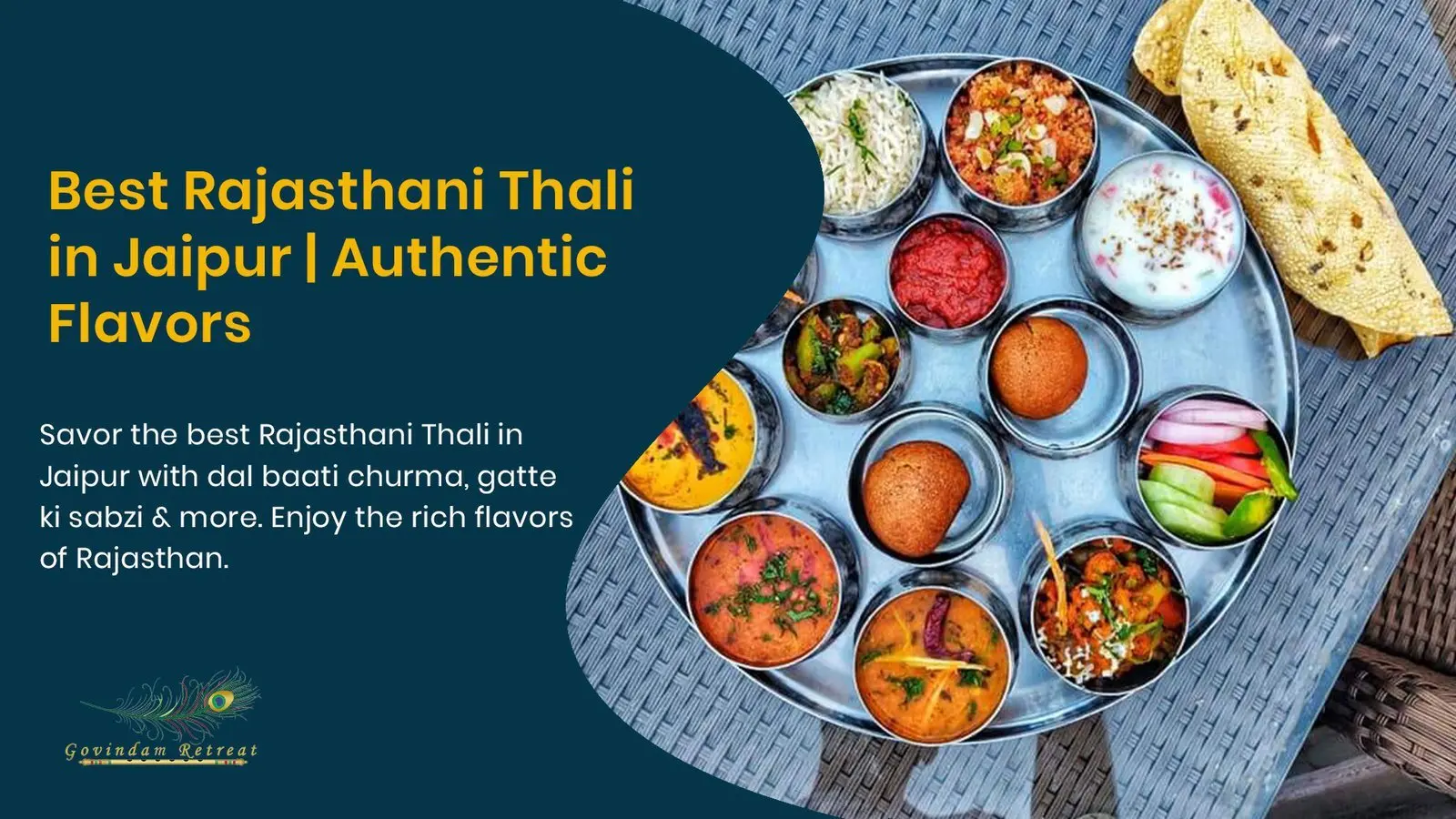
Order a Rajasthani thali at one meal and a North Indian meal at another. At Govindam Retreat, a pure vegetarian restaurant near Govind Dev Ji Temple, the Traditional Rajasthani Thali lists 18 items for Rs 700 + 5% GST, which is Rs 735 per person. It includes mawa bati, masala bati, churma, gatte, kadi pakoda and makke ki roti.
The thali also carries one North Indian style dish, paneer do pyaaza. The menu lists North Indian, South Indian, snacks, beverages and desserts besides the thali. Groups of 30 or more can see both cuisines side by side.
Menu at Govindam Retreat | Rajasthani dishes | North Indian dishes | Price |
|---|---|---|---|
Traditional Rajasthani Thali | Mawa and masala bati, churma, gutta curry, kadi pakoda, makke ki roti | Paneer do pyaaza, lachha paratha | Rs 700 + 5% GST |
Royal Rajasthani Buffet (30+ guests) | Plain and masala bati, churma, gatte ki sabzi | Paneer do pyaz, naan | Rs 800 + GST |
Fusion Party Menu (30+ guests) | N/A | Palak paneer, subz kofta curry, dal tadka, naan, missi roti | Rs 600 + GST |
For the wider list of Rajasthani dishes, read our guide to Jaipur famous food. The full plate is on the Rajasthani thali page. Govindam Retreat is open daily from 10 AM to 11 PM at First Floor, above All Rajasthan Shilp Gram Udyog, Rajamal Ka Talab Road, Gangori Bazaar, Jaipur 302002.