
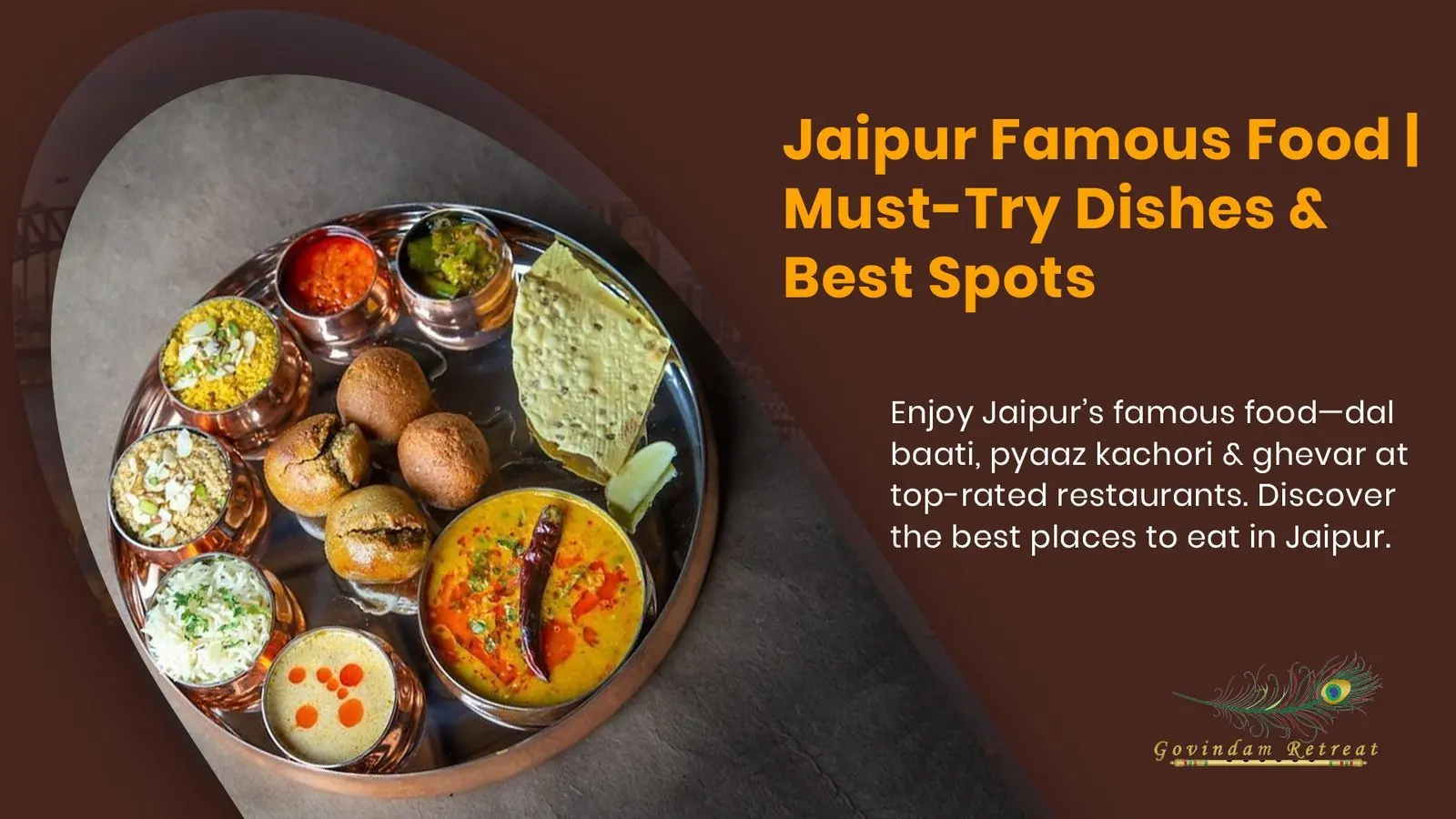
Rajasthani kadhi pakoda (कढ़ी पकोड़ा) is a tangy gravy of curd and besan with fried gram flour pakodas in it. It is thinner and more sour than many Punjabi kadhis, and it is eaten with rice or roti. At Govindam Retreat in Jaipur it comes on the Rs 700 Rajasthani thali as Kadi Pakoda.
What is Rajasthani kadhi pakoda?
Rajasthani kadhi pakoda is a curd and gram flour gravy, simmered with spices, with small fried besan pakodas added near the end. The curd gives sourness and the besan thickens it. Wikipedia's kadhi page says kadhi originated in Rajasthan, and versions are now cooked across north and west India.
The dish uses curd, gram flour and spices, all things a dry-region kitchen keeps on hand. That is the same logic behind gatte, which also use besan and curd. Our page on gatte ki sabji in Jaipur covers that dish.
How is kadhi pakoda made?
Kadhi pakoda is made in two parts. The gravy is curd whisked with besan and water, then simmered slowly with spices until it thickens. The pakodas are spoonfuls of spiced besan batter fried until crisp. They go into the gravy at the end so they soak up some kadhi but keep their shape.
Step | What happens | Why it matters |
|---|---|---|
Whisk | Curd, besan and water mixed smooth | Stops lumps and stops the curd splitting |
Simmer | Gravy cooked slowly with spices | Thickens and takes away the raw besan taste |
Fry | Besan batter fried as small pakodas | Gives the soft, spongy bites |
Combine | Pakodas added to the hot kadhi | Pakodas soak up the gravy |
Temper | Spices fried in ghee or oil and poured on top | Adds aroma |
Recipes differ by family and kitchen, so treat the table as how the dish works, not a fixed recipe.
How is Rajasthani kadhi different from Punjabi kadhi?
The main difference is body. Rajasthani kadhi is usually thinner and more sour, often eaten like a soupy dal with rice. Punjabi kadhi is commonly thicker, with bigger pakodas, and is often eaten with rice as a heavier meal. Both use curd and besan, so the gap is in texture and balance.
Point | Rajasthani kadhi | Punjabi kadhi |
|---|---|---|
Thickness | Thinner, pourable | Thicker |
Taste | Sour, lightly spiced | Milder sour, richer |
Pakodas | Small, or sometimes none | Larger |
Usual partner | Rice, roti, baati | Rice |
Exact texture varies from home to home, so ask how a restaurant makes it if you have a preference. The broader comparison of both cuisines is on our Rajasthani vs North Indian food guide.
What do you eat kadhi pakoda with?
Kadhi pakoda goes best with plain or jeera rice, because the thin gravy soaks into the grains. It also works with roti and with crumbled baati. On a Rajasthani thali it sits next to dal, so you get one lentil gravy and one curd gravy to switch between.
On the Govindam Retreat thali, Kadi Pakoda comes with Jeera Rice, Makke Ki Roti, Lachha Paratha, Masala Bati and Mawa Bati. The Rajasthani thali items list shows every dish on the plate.
Is kadhi pakoda spicy?
Kadhi pakoda is usually sour more than hot. Most of its taste comes from the curd and the tempering. A Rajasthani thali gets its heat from garlic chutney and chilli sides. That leaves kadhi as one of the milder dishes for children and first-timers.
If you want to understand where each flavour on the plate comes from, read our page on the authentic taste of Rajasthan.
Can you get Jain kadhi pakoda?
Kadhi and pakodas are built on curd and besan, but some kitchens add onion to the pakoda batter. If you need Jain food, ask when you book. Govindam Retreat makes Jain food on advance request, and our Jain thali in Jaipur page explains how to ask.
Where can you eat Rajasthani kadhi pakoda in Jaipur?
Govindam Retreat is on the first floor above All Rajasthan Shilp Gram Udyog, Rajamal Ka Talab Road, near Govind Dev Ji Temple, Gangori Bazaar, Jaipur 302002. It is open daily from 10 AM to 11 PM. Call +91 9929949258 to check a dish or book a table. Kadi Pakoda is part of the Traditional Rajasthani Thali at Rs 700 per person. Small groups can walk in, and groups of 10 or more should book through the reservation page.