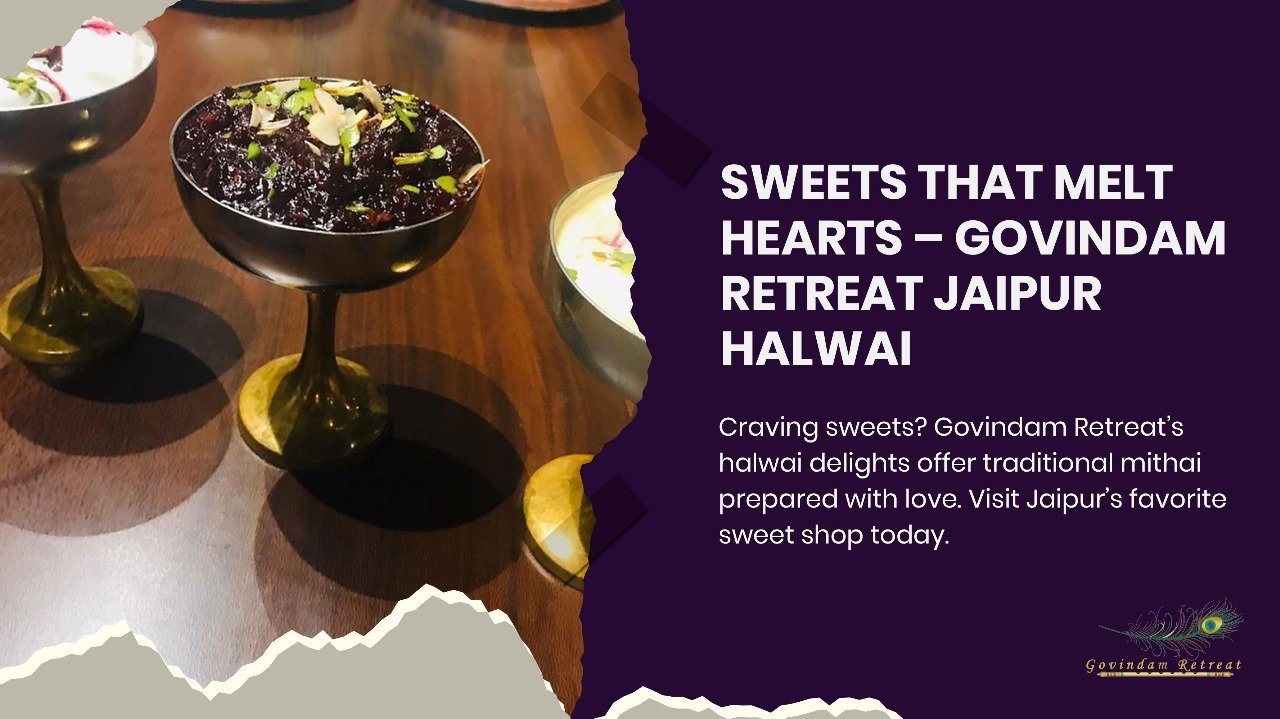
Traditional Jaipur Sweets | Authentic Halwai Experience
Traditional Jaipur SweetsJaipur Mithai23 March 2025
Traditional Jaipur Sweets – Govindam Retreat's Authentic Halwai Experience
Discover traditional Jaipur sweets through Govindam Retreat's authentic halwai experience near Govind Dev Ji Temple. Explore Rajasthan's sweet-making traditions, famous desserts, festive flavors, milk-based delicacies, and time-honored preparation methods. This guide helps tourists, families, and sweet lovers understand the culture behind Jaipur's much-loved traditional mithai and desserts.
Govindam Retreat Editorial TeamReviewed for Jaipur food lovers and tourists
Quick Answer
What Makes Traditional Jaipur Sweets Special?
Traditional Jaipur sweets stand out because they combine regional recipes, skilled preparation, rich ingredients, festival traditions, and generations of halwai knowledge. Sweets such as Ghewar and milk-based desserts are not simply treats; they are closely connected with Rajasthan's celebrations, hospitality, gifting culture, and culinary identity.
Key Highlights
Explore Jaipur's traditional sweet-making culture
Understand the role of skilled halwai preparation
Discover famous Rajasthan desserts and festive sweets
Experience sweets as part of Jaipur's wider food heritage
Key Takeaways
Jaipur sweets are closely linked with Rajasthan's festivals and celebrations.
Traditional halwai skills depend heavily on timing, temperature, and texture.
Ghewar is one of Rajasthan's most recognizable festive sweets.
Milk, ghee, flour, sugar, nuts, and spices appear across many traditional recipes.
Freshness and correct preparation matter more than decorative presentation alone.
Seasonal availability is part of authentic sweet culture, so not every mithai needs to be available throughout the year.
Traditional Jaipur Sweets – Govindam Retreat's Authentic Halwai Experience
Jaipur's food story would be incomplete without its sweets. From festive Ghewar to rich milk-based desserts and traditional mithai, sweets have long been connected with family gatherings, festivals, gifting, temple visits, and Rajasthan hospitality.
The traditional halwai is an important part of this culture. Sweet-making requires more than mixing sugar, milk, flour, and ghee. Heat, timing, texture, consistency, and experience can completely change the final result.
At Govindam Retreat, the halwai-inspired sweet experience connects Jaipur's traditional food culture with a heritage dining setting near Govind Dev Ji Temple. Guests interested in a particular sweet should check current availability, as seasonal and daily selections can change.
What Makes Authentic Halwai Preparation Different?
Festival Sweets and Rajasthan Celebrations
Milk, Ghee, Dry Fruits and Traditional Ingredients
How to Choose Fresh and Authentic Jaipur Sweets
Experience Traditional Sweets at Govindam Retreat
Conclusion
Frequently Asked Questions
The Traditional Halwai Culture of Jaipur
A halwai is traditionally a skilled maker of Indian sweets and related foods. In Rajasthan, halwai craftsmanship has been part of weddings, festivals, religious occasions, family functions, markets, and everyday food culture for generations.
The work may look simple from the outside, but many sweets require careful control at every stage.
Skill Matters More Than a Written Recipe
Two people can use similar ingredients and still produce very different sweets.
A skilled halwai pays attention to:
Heat
Cooking time
Sugar consistency
Milk reduction
Frying temperature
Moisture
Texture
Resting time
These small decisions determine whether a sweet feels fresh, balanced, soft, crisp, creamy, or overly heavy.
Sweets and Jaipur's Social Culture
Traditional mithai is often shared rather than eaten alone.
Sweets appear during:
Festivals
Weddings
Family celebrations
Religious occasions
Gifts
Guest welcomes
Special meals
This makes mithai part of Jaipur's social culture rather than simply the last course of a meal.
Why Tourists Should Explore Halwai Traditions
Visitors often see Rajasthan through forts and palaces. Food offers another way to understand the city.
Watching, learning about, or tasting traditionally prepared sweets helps travelers discover the everyday skills that have also shaped Jaipur's cultural identity.
Famous Traditional Sweets of Jaipur and Rajasthan
Rajasthan has a broad sweet tradition. Some desserts are strongly linked with particular cities, while others are enjoyed across the state.
Not every sweet is available throughout the year, and recipes can differ between families and halwai traditions.
Ghewar
Ghewar is one of Rajasthan's most recognizable sweets.
Its open, honeycomb-like structure makes it visually different from most Indian mithai.
Popular styles may include:
Plain Ghewar
Malai Ghewar
Rabri Ghewar
Mawa-topped variations
Ghewar becomes particularly important during the monsoon festival season.
Mawa Kachori
Mawa Kachori brings together a crisp outer layer and rich sweet filling.
It should not be confused with savory kachori.
The contrast between crisp pastry and sweet mawa filling makes it a distinctive Rajasthan dessert experience.
Rabri
Rabri shows how patience can transform a basic ingredient.
Milk is slowly reduced to develop a thicker texture and deeper flavor.
It may be served on its own or used with other desserts.
Churma
Churma is strongly connected with the famous Dal Baati Churma combination.
Its sweet, grain-based character provides contrast to savory dal and baati.
It can also appear in other traditional forms.
Ladoo and Traditional Mithai
Different ladoos and mithai preparations are associated with households, festivals, gifting, and special occasions.
Ingredients and recipes vary widely, which is part of India's traditional sweet culture.
What Makes Authentic Halwai Preparation Different?
Traditional sweet-making is based heavily on technique.
Machines can help with consistency in modern production, but the principles of good preparation remain important.
Controlling Heat
Milk-based sweets require careful heat control.
Too much heat can change:
Flavor
Texture
Color
Moisture
Slow preparation is often essential.
Getting Sugar Consistency Right
Sugar syrup can behave differently depending on its concentration.
The correct consistency helps determine how a sweet absorbs sweetness and holds its structure.
Frying at the Right Temperature
Fried sweets require controlled oil or ghee temperature.
If the temperature is incorrect, the result can become:
Too oily
Too hard
Unevenly cooked
Poorly textured
Understanding Texture
Traditional halwai work is highly sensory.
The maker watches how ingredients:
Thicken
Bubble
Set
Crisp
Absorb
Cool
Experience helps identify the right moment to move to the next stage.
Festival Sweets and Rajasthan Celebrations
Festivals are one of the strongest reasons Rajasthan's sweet traditions remain so visible.
Different times of year bring different foods into focus.
Teej and Ghewar
Teej has a particularly strong association with Ghewar in Rajasthan.
Sweet shops fill with different styles and sizes during the season, and families often exchange the dessert as part of celebrations.
Raksha Bandhan
Raksha Bandhan is another important sweet-gifting occasion.
Ghewar and other mithai often become part of family exchanges and festive meals.
Diwali
Diwali brings a wider variety of mithai into homes and gifting traditions.
Families may choose:
Milk sweets
Dry fruit sweets
Ladoos
Regional specialties
Gift boxes
Weddings and Family Celebrations
Traditional sweets also appear at:
Weddings
Engagements
Birthdays
Religious functions
Family gatherings
The choice of sweet often reflects family preference, season, and occasion.
Milk, Ghee, Dry Fruits and Traditional Ingredients
Traditional Jaipur sweets often use a relatively simple set of ingredients. What changes is how those ingredients are handled.
Milk
Milk forms the foundation of many Indian desserts.
Slow reduction can create:
Rabri
Mawa
Rich milk-based preparations
Freshness and careful cooking are particularly important.
Desi Ghee
Ghee contributes:
Aroma
Richness
Texture
Traditional character
However, good sweets should still feel balanced rather than simply heavy.
Dry Fruits
Nuts and dry fruits may provide:
Texture
Natural richness
Visual appeal
Flavor contrast
They are especially common in premium and festive preparations.
Flour and Grain
Different sweets use:
Wheat
Refined flour
Gram flour
Other grain-based ingredients
Preparation determines whether the final texture becomes crisp, soft, crumbly, or dense.
Traditional Flavorings
Depending on the sweet, flavor may come from ingredients such as:
Cardamom
Saffron
Nuts
Milk
Ghee
Authentic flavor should come from a balanced recipe rather than excessive sweetness.
How to Choose Fresh and Authentic Jaipur Sweets
Tourists often want to take Jaipur sweets home or enjoy them during their visit.
A few simple checks can help.
Look at Freshness
Fresh sweets should have the texture expected from that particular preparation.
For example, a sweet meant to be crisp should not feel stale or soggy.
Do Not Judge Only by Decoration
Heavy garnishing does not automatically mean better quality.
Look for:
Good texture
Balanced sweetness
Fresh aroma
Proper preparation
Ask What Is Fresh Today
One of the easiest questions is:
What has been freshly prepared today?
This can be more useful than ordering solely by popularity.
Ask About Seasonal Specialties
Some sweets make more sense during particular festivals or seasons.
Seasonal preparation can be part of an authentic Jaipur sweet experience.
Ask About Storage Before Carrying Sweets
If you plan to travel with mithai, ask:
How should it be stored?
How soon should it be eaten?
Does it need refrigeration?
Is it suitable for a long journey?
Different sweets have very different storage needs.
Experience Traditional Sweets at Govindam Retreat
Govindam Retreat's location near Govind Dev Ji Temple makes it convenient for visitors exploring Jaipur's heritage area to connect dining with local sweet traditions.
Complete Your Rajasthan Meal With Something Sweet
Visitors exploring Rajasthan food may begin with dishes such as:
Dal Baati Churma
Gatte Ki Sabzi
Ker Sangri
Traditional breads
A traditional dessert can provide a natural finish to the meal.
The Best Rajasthani Thali in Jaipur guide provides a deeper introduction to the savory side of Rajasthan cuisine.
A Cultural Experience for Tourists
For travelers, tasting a local sweet becomes more meaningful when they understand:
How it is prepared
When it is traditionally eaten
Which festival it belongs to
What makes its texture special
That context turns dessert into cultural discovery.
Near Govind Dev Ji Temple
Visitors planning a temple or heritage-area itinerary can include Govindam Retreat as part of their dining route.
This is particularly useful for families and tourists who want to combine:
Jaipur sightseeing
Vegetarian dining
Rajasthan food
Traditional sweets
Check Today's Sweet Selection
Traditional and seasonal sweets may not be available every day.
If you are visiting specifically for Ghewar, Rabri, Mawa Kachori, or another item, confirm the current selection before making a special trip.
Conclusion
Traditional Jaipur sweets are more than sugar and celebration. They represent craftsmanship, patience, festivals, family traditions, hospitality, and generations of food knowledge.
Ghewar connects strongly with Rajasthan's festival culture. Rabri shows the value of slow milk reduction. Mawa Kachori brings crisp and rich textures together. Churma connects dessert with one of Rajasthan's most famous meals.
Behind these foods is the traditional halwai—the person whose understanding of heat, timing, texture, and ingredients turns simple raw materials into memorable sweets.
For visitors exploring Jaipur, tasting traditional mithai alongside Rajasthan cuisine can add another layer to the journey. At Govindam Retreat near Govind Dev Ji Temple, guests can connect vegetarian dining with Jaipur's wider food heritage.
For the best experience, ask what is fresh, what is seasonal, and what is available on the day you visit.
Book Table
Reserve Your Royal Vegetarian Dining Experience
Planning lunch, dinner, a family meal, tourist group visit, corporate lunch, or celebration near Govind Dev Ji Temple? Book your table at Govindam Retreat.
Ghewar is one of the sweets most strongly associated with Jaipur and Rajasthan, especially during Teej and Raksha Bandhan. Jaipur and Rajasthan also have rich traditions around Mawa Kachori, Rabri, Churma, ladoos, milk sweets, and other regional mithai.
What is a traditional halwai?
A halwai is a skilled maker of Indian sweets and related traditional foods. Halwai work often depends on practical experience with milk reduction, frying temperature, sugar consistency, texture, timing, and other preparation details that strongly affect the final sweet.
Is Ghewar available throughout the year in Jaipur?
Availability varies by shop, restaurant, and season. Ghewar is particularly associated with the Teej and Raksha Bandhan period. Some places may offer it at other times, but visitors seeking it specifically should confirm current availability before traveling.
What sweets should tourists try in Jaipur?
Tourists can explore Ghewar, Mawa Kachori, Rabri, Churma, and other freshly prepared Rajasthan mithai. The best choice can depend on the season, so asking which traditional sweet is fresh that day is useful.
Can I carry Jaipur sweets while travelling?
Some sweets travel better than others. Milk-heavy or fresh desserts may require refrigeration or faster consumption. Ask about storage, shelf life, packaging, and travel suitability for the specific sweet before carrying it on a long journey.
Can visitors enjoy traditional sweets at Govindam Retreat?
Govindam Retreat connects Rajasthan-inspired vegetarian dining with Jaipur's traditional food culture. Because sweet selections can change by season and day, guests looking for a specific dessert should confirm current availability before visiting.
Subscribe
Get Jaipur food and dining guides
Receive updates on Rajasthani food, thali guides, festive dining, and Govindam Retreat experiences.