
Ker sangri in Jaipur is easy to read about and harder to find on a plate, because not every kitchen cooks dried desert berries and beans. Ker is a small berry from a thorny desert shrub, and sangri is the long pod of the khejri tree. Together they make a dry, tangy sabzi. Govindam Retreat, near Govind Dev Ji Temple, cooks it and keeps it on the menu.
What is ker sangri?
Ker sangri is a dry vegetable dish from western Rajasthan made with two dried desert foods. Ker is the berry of the Capparis decidua shrub, and sangri is the pod of the khejri tree, Prosopis cineraria. Both are dried after harvest, soaked before cooking, and stir-fried with oil and spices.
The khejri is the state tree of Rajasthan and grows where little else does. You can read about the plants on Wikipedia's pages for Capparis decidua and Prosopis cineraria. Because both are stored dry, families could cook a green dish in months when fresh vegetables were scarce.
What does ker sangri taste like?
Ker sangri tastes sour, slightly bitter and chewy, with a spice coating rather than a gravy. The ker berries give a sharp, almost pickled bite, and the sangri pods are firm and earthy. People eat it with bajra roti or plain chapati, often in small amounts beside other dishes.
If you like pickles, you will probably like ker sangri. If you prefer soft, creamy curries, start with a spoonful. The sourness is strongest when the dish has been cooked with dried mango, and milder when curd is used. The Rajasthani veg dishes guide puts it next to gatte, kadhi and dal baati so you can compare.
Can you eat ker sangri at Govindam Retreat?
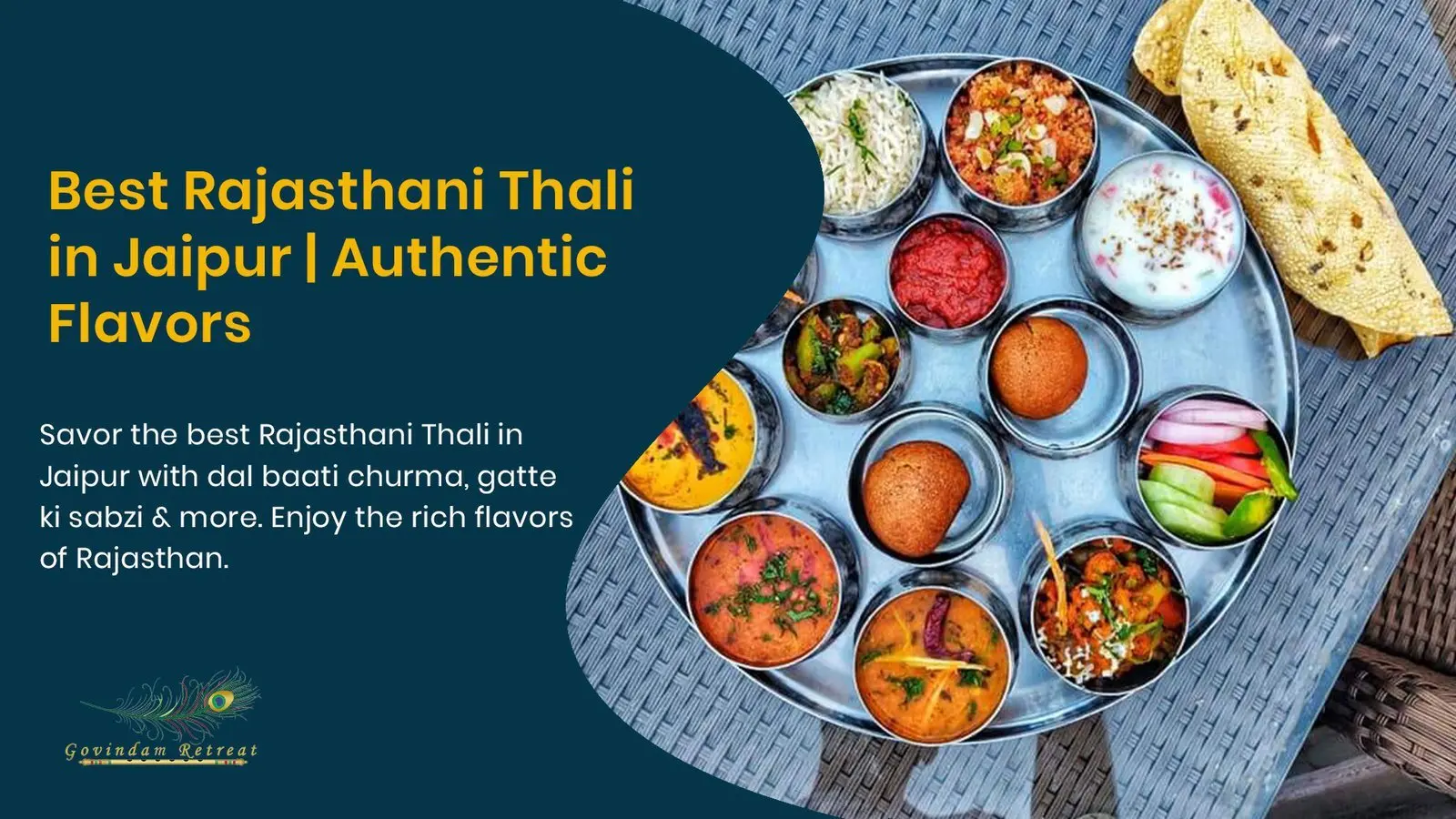
Yes. Ker sangri is cooked at Govindam Retreat and is on the restaurant menu. It is not one of the 18 items on the fixed Rajasthani thali, which carries Gutta Curry, Kadi Pakoda, Daal Fry, Mawa Bati, Masala Bati and Sweetened Churma among others. Ask for ker sangri by name when you order.
The fixed plate is listed on the Rajasthani thali items list, and the thali costs Rs 700 per person plus 5% GST on the thali page. Ordering ker sangri with the thali puts the dry desert sabzi next to the curd-based gatte and kadhi.
How is ker sangri different from gatte ki sabzi?
Ker sangri is a dry dish of dried berries and pods, while gatte ki sabzi is gram flour dumplings in a curd gravy. Ker sangri is sour and chewy; gatte are soft and creamy. Both are Rajasthani, and both suit cooks who cannot get fresh vegetables, but they eat very differently.
Our page comparing gatte ki sabzi and ker sangri lays the two side by side. If you want to know how ker sangri is cooked at home, read ker sangri ki sabji.
Where do you get ker sangri near Govind Dev Ji Temple?
Govindam Retreat is on the first floor above All Rajasthan Shilp Gram Udyog, Rajamal Ka Talab Road, near Govind Dev Ji Temple, Gangori Bazaar, Jaipur 302002. It is open daily from 10 AM to 11 PM. Call +91 9929949258 to book a table or ask about a dish. Groups of 10 or more should book ahead.