
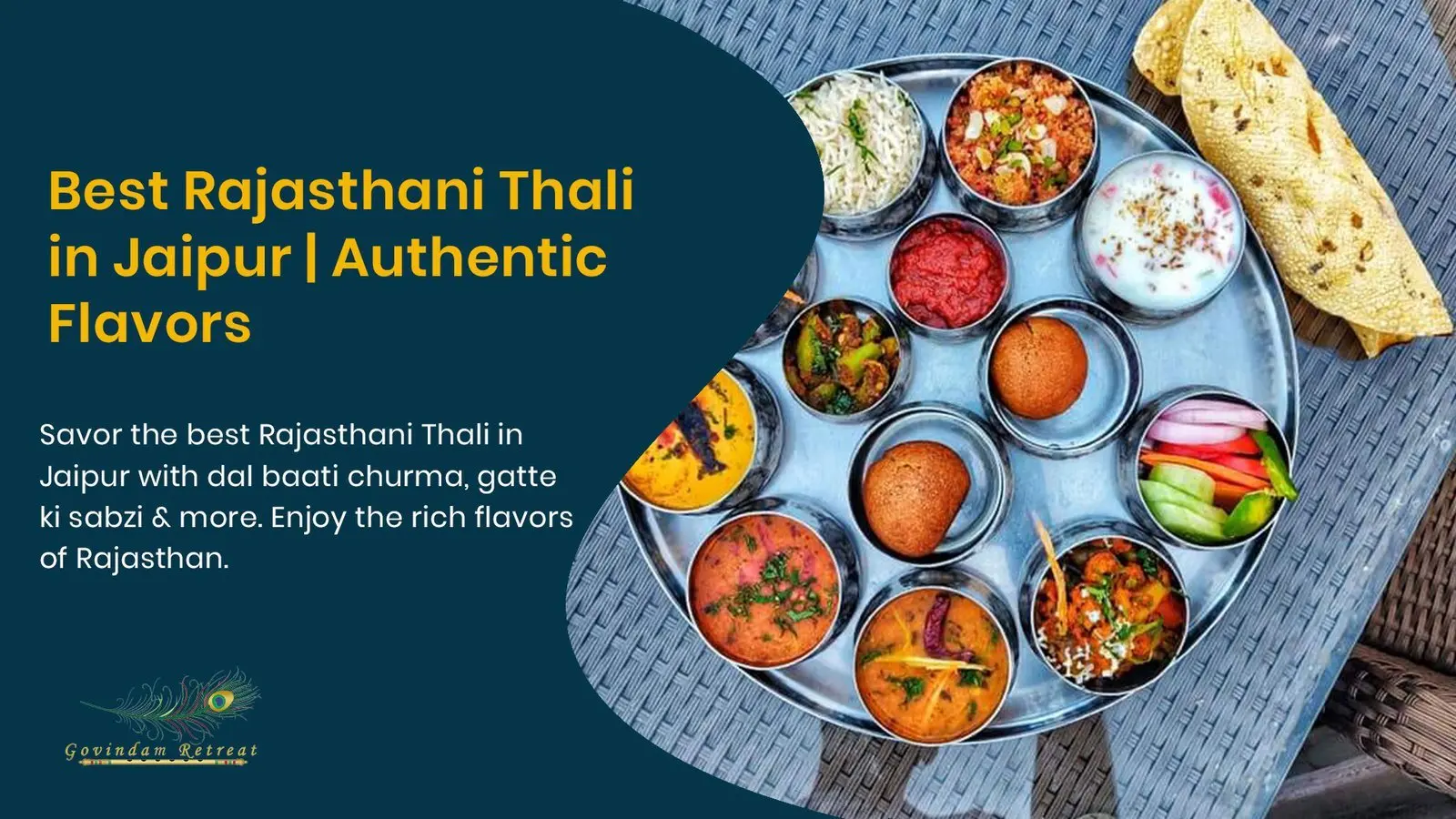
Rajasthani lahsun chutney (राजस्थानी लहसुन की चटनी) is a thick red paste of garlic and dried red chilli. You will also see it written lehsun ki chutney or lasun chutney. A spoon of it sits on the side of a dal baati plate, and it is meant to be taken in small dabs, not scooped. On the Govindam Retreat thali in Jaipur it appears as Lehsun Ki Chutney.
What is Rajasthani lahsun chutney?
Rajasthani lahsun chutney is a spicy condiment made by grinding peeled garlic with dried red chillies and salt. Many homes add a little cumin, lemon or dried mango, and some finish it with hot oil. It is red, sharp and hot, and it is eaten with baati, bajra roti and dal.
The chutney belongs to the same desert kitchen as ker sangri and gatte. Garlic and dried chillies keep for a long time without a fridge, so a jar of this paste could flavour plain roti for days. Wikipedia's garlic chutney page covers the wider family of garlic chutneys across India.
How is lahsun ki chutney made at home?
Lahsun ki chutney is made in three steps. Soak dried red chillies in warm water, grind them with peeled garlic and salt into a coarse paste, then cook the paste briefly in oil. The soaking softens the chilli skins, and the cooking takes the raw bite off the garlic.
Step | What you do | What it changes |
|---|---|---|
Soak | Dried red chillies in warm water | Softer skins, smoother paste |
Grind | Chillies, garlic and salt together | Sets the heat and texture |
Cook | Paste in hot oil for a few minutes | Mellows raw garlic |
Finish | Optional lemon or dried mango | Adds a sour edge |
Exact amounts differ from family to family. Some cooks skip the oil and serve it raw, which is sharper and keeps for a shorter time. Treat the table as how the chutney works, not a fixed recipe.
How is Rajasthani garlic chutney different from other garlic chutneys?
Rajasthani garlic chutney is a wet, red paste built mainly on garlic, dried red chilli and salt. Other Indian garlic chutneys often add coconut, peanuts or lentils. The dry garlic chutney that goes inside a Mumbai vada pav, for example, is a crumbly powder, while the Rajasthani one is spread or dabbed.
That difference matters when you order. If you expect a mild, nutty chutney, the Rajasthani version will surprise you. It is closer to a chilli paste than a dip, and its heat comes from the red chilli more than the garlic.
How long does homemade lahsun chutney keep?
A cooked lahsun chutney keeps longer than a raw one, because the oil and heat slow spoilage. Store it in a clean, dry glass jar in the fridge and always use a dry spoon. A raw version, ground and served without cooking, is best eaten fresh.
How do you eat lahsun chutney with dal baati?
Eat lahsun chutney a little at a time. Break a baati, pour dal over it, then touch the bite to the chutney before you eat it. A whole spoonful at once is too hot for most people. With bajra roti or makke ki roti, spread a thin layer across the bread instead.
The chutney does a job on the plate. Ghee-soaked baati and sweet churma are rich, and the garlic and chilli cut through that. If you want to understand the sweet side of the same plate, read our guide to Rajasthani churma.
Is lahsun ki chutney on the Govindam Retreat thali?
Yes. Lehsun Ki Chutney is one of the 18 items on the Govindam Retreat Rajasthani thali, which costs Rs 700 per person plus 5% GST. It sits next to Raw Mango Pickle, Moong Dal Papad and mirchi ke tipore, the fried green chilli side, as the sharp part of the plate.
The full plate is listed on the Rajasthani thali items list. If dal baati is the reason you are coming, our page on the dal bati churma restaurant in Jaipur covers the main dish.
Can you get the thali without garlic chutney?
Yes, for Jain guests. Jain food at Govindam Retreat is made on advance request, and garlic chutney is one of the items that changes on a Jain plate. Say so when you book, and the kitchen will plan the plate without onion and garlic.
Our page on the Jain thali in Jaipur names the thali items that carry onion or garlic. The Rajasthani cuisine guide shows where chutneys and pickles fit into desert cooking. Wikipedia's Rajasthani cuisine page has the wider history.
Where can you taste Rajasthani lahsun chutney near Govind Dev Ji Temple?
Govindam Retreat serves Lehsun Ki Chutney on its Rajasthani thali. The restaurant is at First Floor, above All Rajasthan Shilp Gram Udyog, Rajamal Ka Talab Road, near Govind Dev Ji Temple, Gangori Bazaar, Jaipur 302002. It is open daily from 10 AM to 11 PM. Small groups can walk in. Call +91 9929949258 to book for 10 or more.