
Ker sangri ki sabji (केर सांगरी की सब्जी) is cooked in three stages. The dried ker berries and sangri pods are soaked, boiled until soft, and then fried in oil with dry spices. There is no gravy. The finished sabzi is dry, sour and a little chewy, and it is eaten with roti.
How is ker sangri ki sabji cooked?
Ker sangri ki sabji is cooked by soaking the dried ker and sangri for several hours, boiling them to soften, and then frying them with spices. Because both ingredients are bought dry, the soaking matters most. Under-soaked sangri stays tough, and that is a common reason the dish turns out hard at home.
Step | What happens | Why it matters |
|---|---|---|
Soak | Dried ker and sangri sit in water, often overnight | Softens the hard dried pods |
Boil | Soaked ker and sangri are boiled and drained | Cuts bitterness and finishes softening |
Fry | Fried in oil with chilli, coriander and other dry spices | Gives the dry spice coating |
Sour note | Many homes add dried mango or curd | Adds the tangy taste people expect |
Exact spice amounts vary from family to family, so treat this as how the dish works, not a fixed recipe. What the two ingredients are is explained on our ker sangri in Jaipur page.
What do you eat with ker sangri ki sabji?
Ker sangri ki sabji is eaten with bajra roti, makke ki roti or plain chapati. It is strong, so people take a small portion beside a milder dish like dal or kadhi. On a festive plate it sits with the other dry sabzis rather than as the main curry.
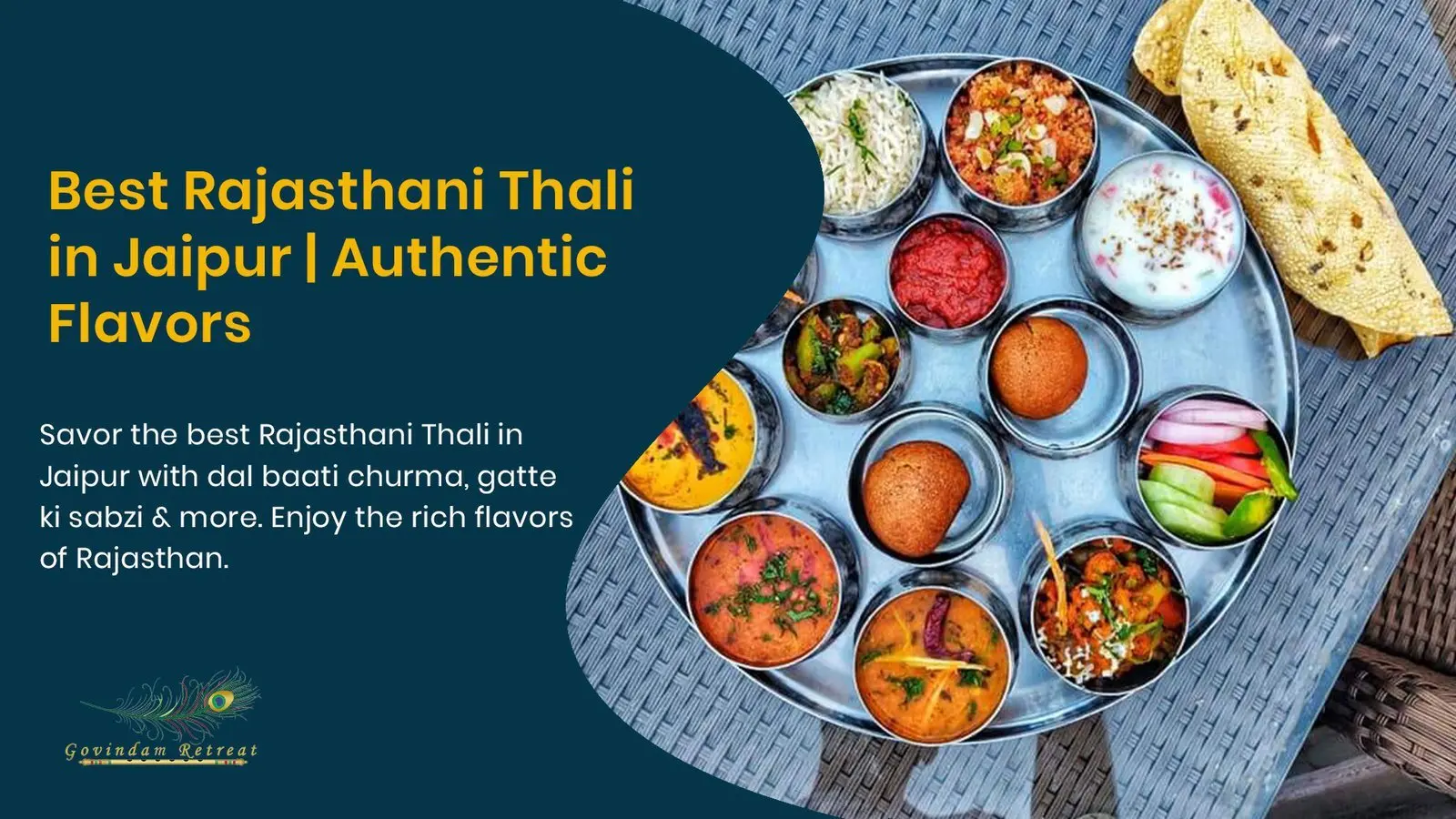
At Govindam Retreat, ker sangri is on the menu and you can order it alongside the thali. The thali brings Makke Ki Roti, Daal Fry and Kadi Pakoda, which are the milder partners this sabzi needs. If you are cooking it at home instead, serve it with a plain dal so the meal is not sour from end to end. See the full plate on the Rajasthani thali items list.
How long does ker sangri ki sabji keep?
Ker sangri ki sabji is dry and cooked in oil, so it holds up better than a gravy dish. Cooked at home, it is usually eaten within a day or two. The dried raw ker and sangri store for months in an airtight jar.
Food safety depends on how it is made and kept, so follow the cook's advice for any sabzi you carry. The ker shrub behind the dish is described on Wikipedia's Capparis decidua page.
Can you order ker sangri ki sabji at Govindam Retreat?
Yes. Ker sangri is cooked at Govindam Retreat and is listed on the menu, separate from the fixed 18 item thali. Ask for it by name when you order. The Rs 700 Rajasthani thali, plus 5% GST, has Gutta Curry and Kadi Pakoda as its curd-based dishes, and ker sangri sits well next to them as a dry, sour side.
Our guide to gatte ki sabji in Jaipur explains the other desert-style sabzi. The Rajasthani cuisine guide covers the wider food of the state.
How do you reach Govindam Retreat?
Govindam Retreat is on the first floor above All Rajasthan Shilp Gram Udyog, Rajamal Ka Talab Road, near Govind Dev Ji Temple, Gangori Bazaar, Jaipur 302002. It is open daily from 10 AM to 11 PM. Call +91 9929949258 to ask about a dish or book a table.